
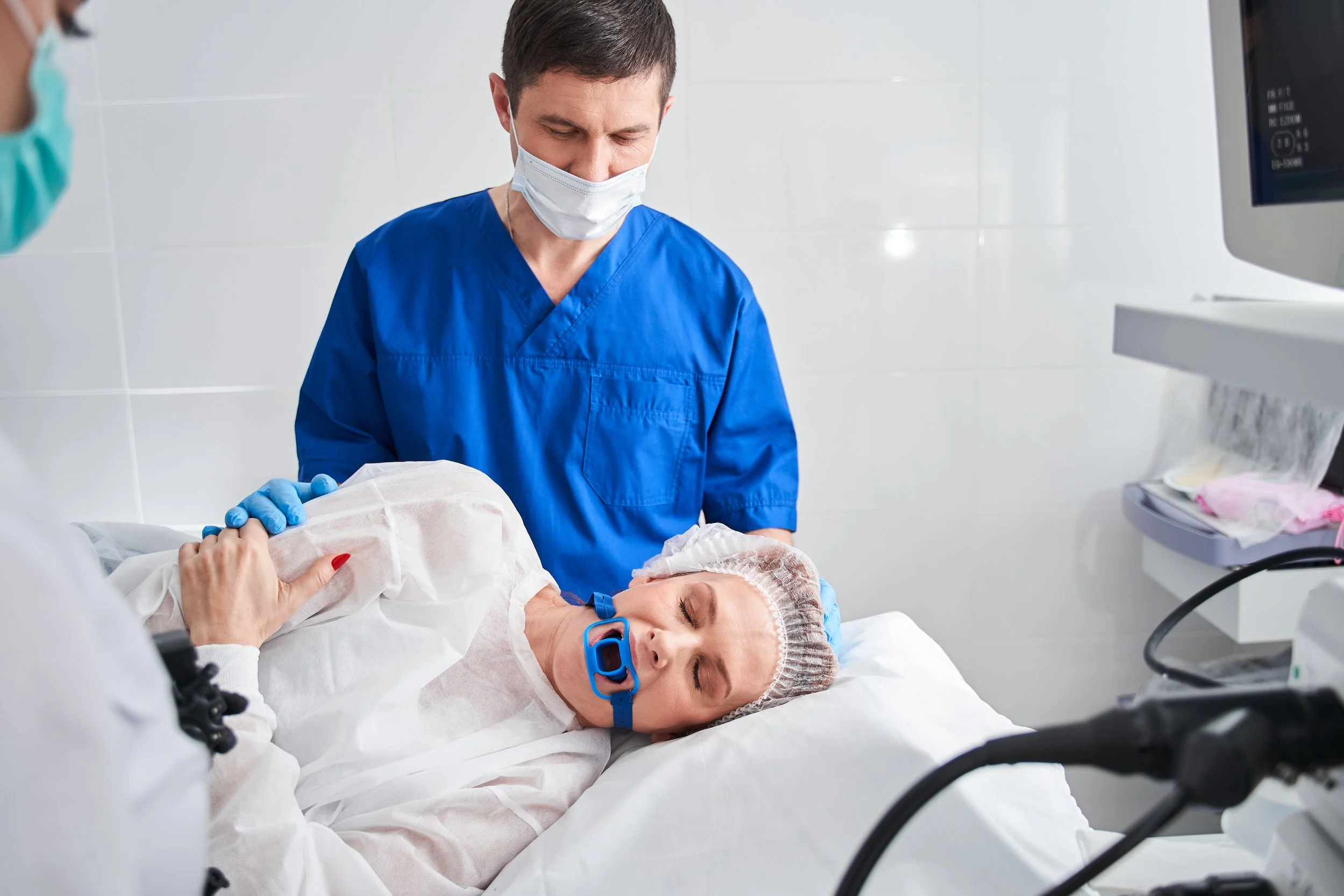
EGD
Esophagogastroduodenoscopy (EGD) is a procedure in which your gastroenterologist looks inside your esophagus, stomach, and duodenum (first part of the small bowel). Common reasons for the test include difficulty swallowing, acid reflux or heartburn, abdominal pain, nausea, vomiting, bleeding, or low blood count (anemia).
What To Expect During the Procedure
The inside of the upper GI tract is visualized with an instrument called an endoscope. An endoscope is a thin, smooth, flexible, light tube that is equipped with a tiny video camera. The endoscope is passed through your mouth and advanced into the upper part of your GI tract. During this time, the video shows up on a screen so the doctor may examine the lining of the esophagus, stomach and duodenum. Instruments can be passed through a channel in the endoscope to take biopsies, remove polyps or stop bleeding. For those patients who may have a narrowing in the esophagus, which can be causing problems swallowing, the doctor may choose to stretch that area out with special instruments called dilators. Sedatives will be administered during the exam to help you tolerate the procedure during which you will remain breathing on your own.
What To Expect After the Procedure
Once the procedure is completed, you will recover in the recovery area for 30 minutes. During that time, your vital signs will be captured, continuation of fluids will be administered, and your provider will come speak with you about your procedure findings. Once you are discharged, you are not to drive, consume alcohol, or make any important decisions for the following 12 hours.
Like all procedures, there are risks and side effects. Complications are rare, but can include bleeding, puncture of the stomach lining, or a sedative reaction. Some patients report a sore throat for a couple of days. You will be provided with a written summary of the procedure, discharge instructions explaining your recovery, and contact information for follow-up questions or concerns.