
Colonoscopy
A colonoscopy is a procedure in which your gastroenterologist can visualize the lining of your colon, also referred to as your large intestine, and possibly the last part of your small bowel called the terminal ileum. During the procedure, tissue samples can be collected as well as the removal of any abnormal growths that are detected.
A baseline colonoscopy is recommended for everyone once they turn 45 years old to screen for colon polyps/colon cancer. For those at higher risk (such as a family history of colon cancer), a colonoscopy is indicated earlier. Additional indications for having this test done can include but are not limited to the following: rectal bleeding, blood detected on stool tests, history of colon polyps, anemia (low blood count), or a change in bowel habits.
What To Expect During the Procedure
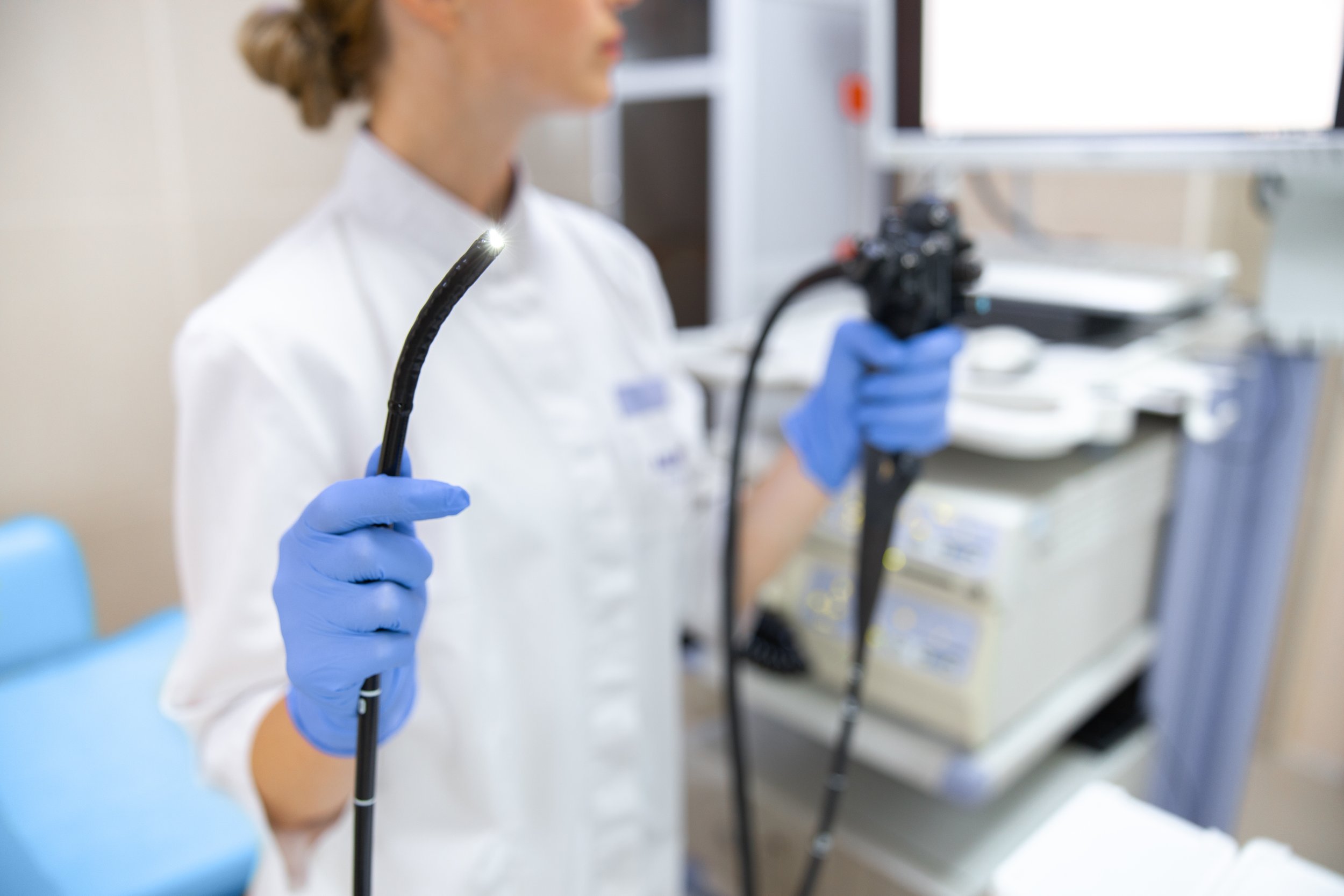
The inside of the colon is visualized with an instrument called a colonoscope. A colonoscope is a thin, smooth, flexible, light tube that is equipped with a tiny video camera. The colonoscope is inserted into your rectum and advanced into the colon; the video shows up on a screen so the doctor may examine the lining of the colon. The doctor will guide the colonoscope through your rectum and your entire colon to an area where the small intestine meets the colon called the cecum. Other instruments can be passed through a channel in the colonoscope to take biopsies or remove polyps. Sedatives will be administered during the exam to help you tolerate the procedure during which you will remain breathing on your own.
What To Expect After the Procedure
Once the procedure is completed, you will recover in the recovery area for a minimum of 30 minutes. During that time, your vital signs will be captured, continuation of fluids will be administered, and your provider will come speak with you about your procedure findings. Once you are discharged, you are not to drive, consume alcohol, or make any important decisions for the following 12 hours.
Like all procedures, there are risks and side effects. Complications are rare, but can include a temporary feeling of bloating, bleeding after a biopsy or polyp removal, perforation, or a sedative reaction. You will be provided with a written summary of the procedure, discharge instructions explaining your recovery, and contact information for follow-up questions or concerns.